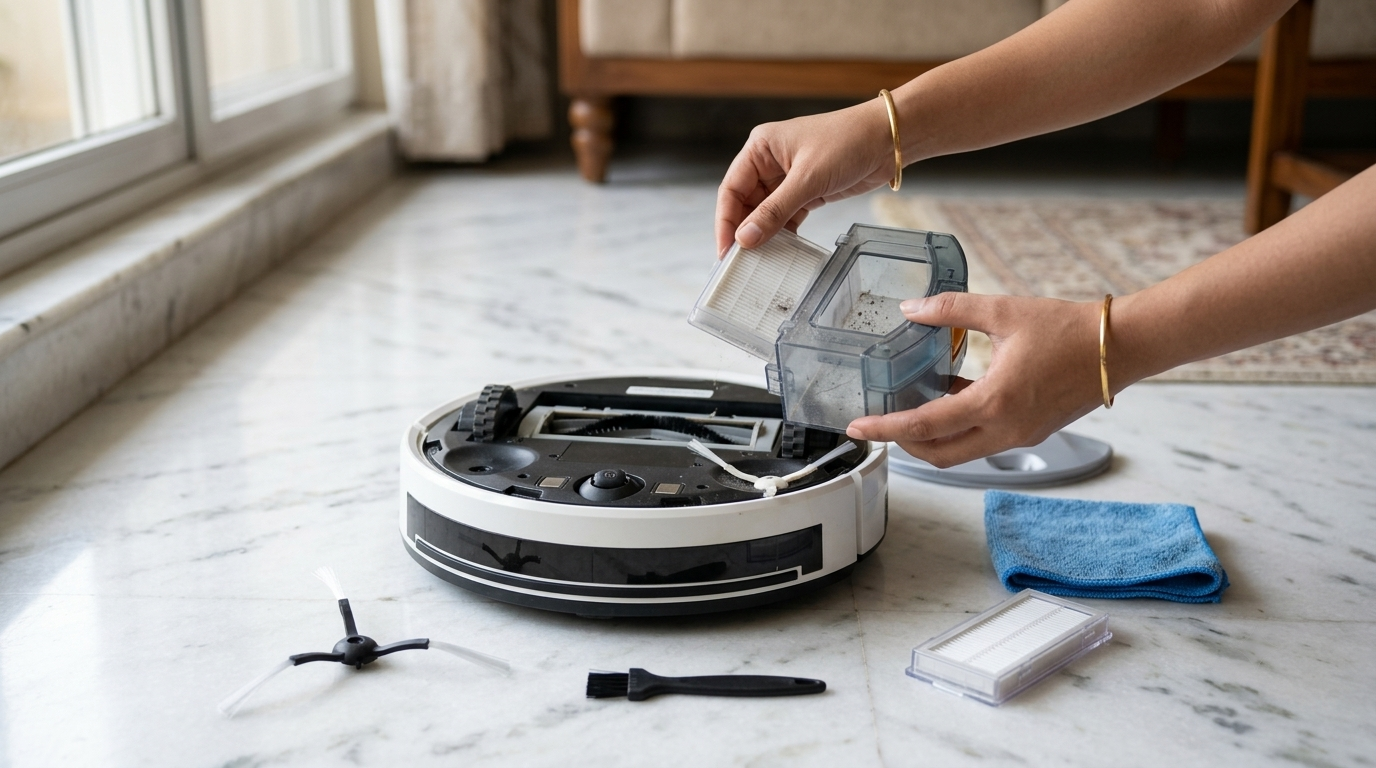
A robot vacuum cleaner is designed to make life easier by automating daily cleaning. Like any home appliance, regular maintenance helps ensure consistent performance and a longer lifespan.
The good news is that maintaining a robot vacuum cleaner is simple and usually takes only a few minutes each week.
In this guide, we’ll cover everything you need to know to keep your robot vacuum operating at its best.
Why Maintenance Is Important
Many people assume that robot vacuum cleaners require no maintenance at all.
While they significantly reduce cleaning effort, they still benefit from occasional care.
Proper maintenance helps:
- Improve cleaning performance
- Extend product life
- Reduce wear and tear
- Ensure consistent operation
- Prevent unnecessary issues
A well-maintained robot vacuum can continue delivering reliable performance for years.
Empty the Dustbin Regularly
The dustbin collects:
- Dust
- Hair
- Dirt
- Debris
If the dustbin becomes too full, cleaning efficiency may decrease.
For best results:
- Check the dustbin regularly
- Empty it as needed
- Clean away any remaining dust
Homes with pets or heavy dust may require more frequent emptying.
Clean the Main Brush
The main brush plays a major role in collecting dirt and hair.
Over time, hair and debris can become wrapped around the brush.
Routine cleaning helps:
- Maintain performance
- Improve hair pickup
- Reduce unnecessary strain
Inspect the brush periodically and remove tangled hair when required.
Check Side Brushes
Side brushes help direct dust and debris toward the vacuum path.
These brushes can accumulate:
- Hair
- Dust
- Threads
Cleaning them regularly helps maintain effective corner and edge cleaning.
Clean the Filters
Filters help trap fine dust particles.
Over time, filters can become clogged, reducing airflow and efficiency.
Follow the manufacturer’s maintenance recommendations and replace filters when necessary.
Clean filters contribute to better overall cleaning performance.
Keep Sensors Clean
Robot vacuum cleaners use sensors to navigate around the home.
Dust buildup on sensors may affect performance.
Occasionally wipe sensors gently using a soft, dry cloth.
This helps ensure smooth navigation and operation.
Inspect the Wheels
Wheels can sometimes collect:
- Hair
- Dust
- Small debris
Regular inspection helps ensure smooth movement throughout the home.
Clean wheels when necessary to maintain mobility.
Maintain the Charging Area
The charging dock should remain:
- Clean
- Accessible
- Free from obstacles
Keeping the charging area clear allows the robot vacuum to return and recharge efficiently.
Replace Consumable Parts When Needed
Certain components naturally wear over time.
These may include:
- Filters
- Side brushes
- Mop pads
Using replacement parts when required helps maintain optimal cleaning performance.
Many robot vacuum owners appreciate having spare parts available for future maintenance.
Schedule Cleaning Consistently
Regular operation can actually help reduce maintenance requirements.
Daily cleaning prevents excessive buildup of:
- Dust
- Hair
- Dirt
This allows the robot vacuum to work more efficiently over time.
Common Maintenance Mistakes
Ignoring Hair Buildup
Hair can gradually reduce cleaning performance if not removed.
Waiting Too Long to Empty the Dustbin
An overloaded dustbin can impact efficiency.
Forgetting About Filters
Dirty filters can restrict airflow.
Skipping Sensor Cleaning
Clean sensors contribute to smoother navigation.
How Often Should You Perform Maintenance?
The answer depends on:
- Home size
- Dust levels
- Number of occupants
- Presence of pets
As a general guideline:
Daily
- Empty dustbin if needed
Weekly
- Check brushes
- Inspect wheels
Monthly
- Clean sensors
- Review filter condition
As Needed
- Replace consumable parts
Benefits of Regular Maintenance
A well-maintained robot vacuum cleaner offers:
- Better cleaning performance
- Longer lifespan
- Consistent operation
- Improved reliability
- Better overall ownership experience
Just a few minutes of maintenance can make a significant difference.
Final Thoughts
Robot vacuum cleaners are designed for convenience, but occasional maintenance helps keep them operating efficiently.
Simple habits such as emptying the dustbin, cleaning brushes and maintaining filters can extend the life of your appliance and improve cleaning performance.
With proper care, a robot vacuum cleaner can continue delivering reliable daily cleaning for years to come.
Frequently Asked Questions
How often should I empty the dustbin?
This depends on dust levels and usage frequency, but regular checks are recommended.
Do robot vacuum cleaners require a lot of maintenance?
No. Most maintenance tasks are simple and take only a few minutes.
Why is brush cleaning important?
Removing tangled hair helps maintain cleaning efficiency.
How often should filters be replaced?
Follow the manufacturer’s recommendations based on usage and environment.
Does maintenance improve performance?
Yes. Regular maintenance helps ensure consistent cleaning results and longer product life.


Add comment